A panoramic is a rotating, multi-second exposure with a lot that can go wrong — but like bitewing errors, every mistake leaves its own fingerprint. Learn seven looks, name any error on sight.
Bitewing errors mostly come from processing and placement. Panoramic errors mostly come from patient positioning — the machine rotates around a fixed focal trough, so if the patient's chin, spine, or midline isn't exactly where it should be, the image distorts in a very specific, recognizable way.
Same exam strategy as bitewing errors: don't memorize definitions — learn to recognize the look, and the cause follows automatically.
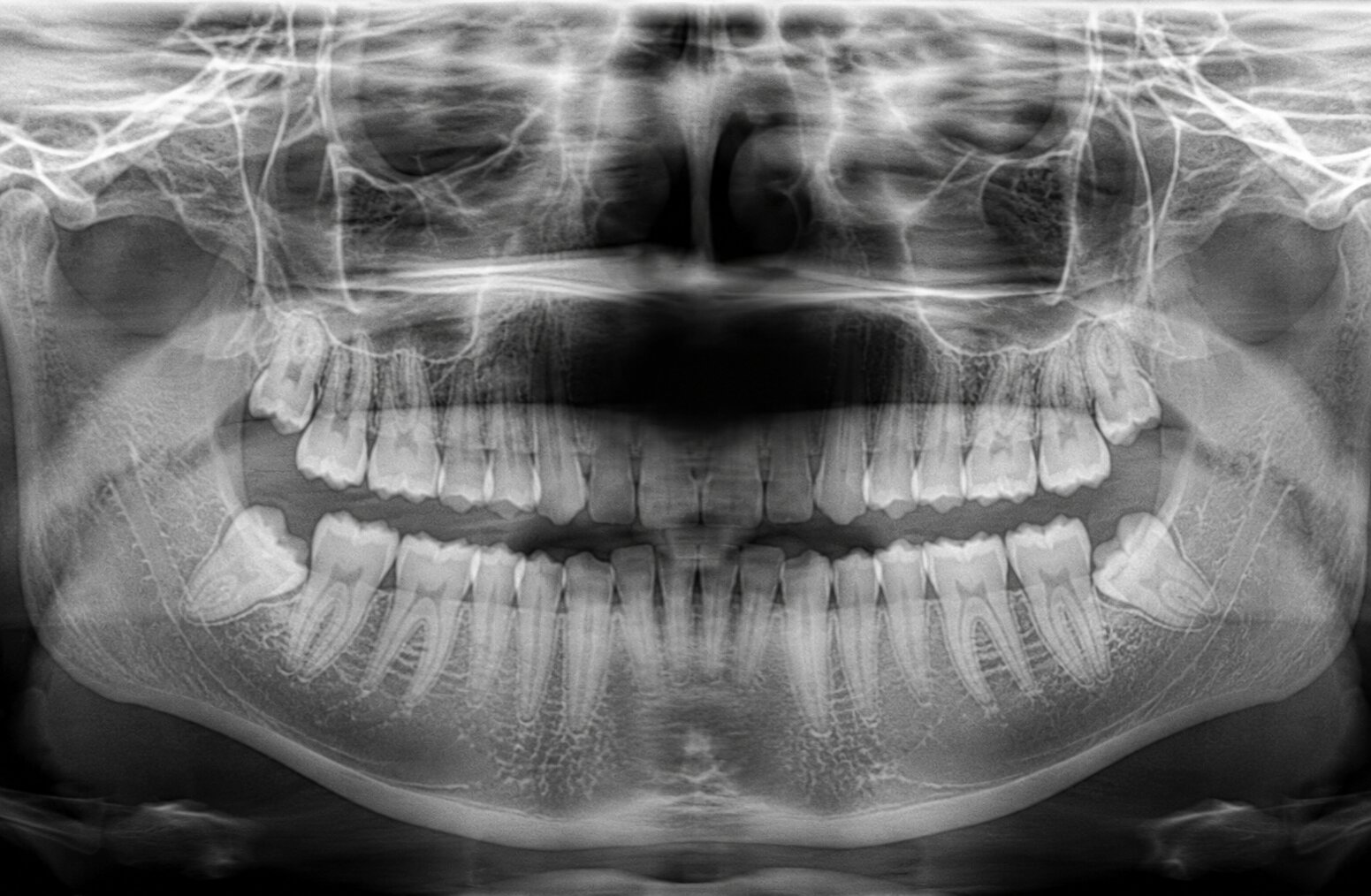
Look: a dark shadow washes out the maxillary anterior roots — the single most common panoramic error.
Fix: tongue pressed firmly against the roof of the mouth for the whole exposure.
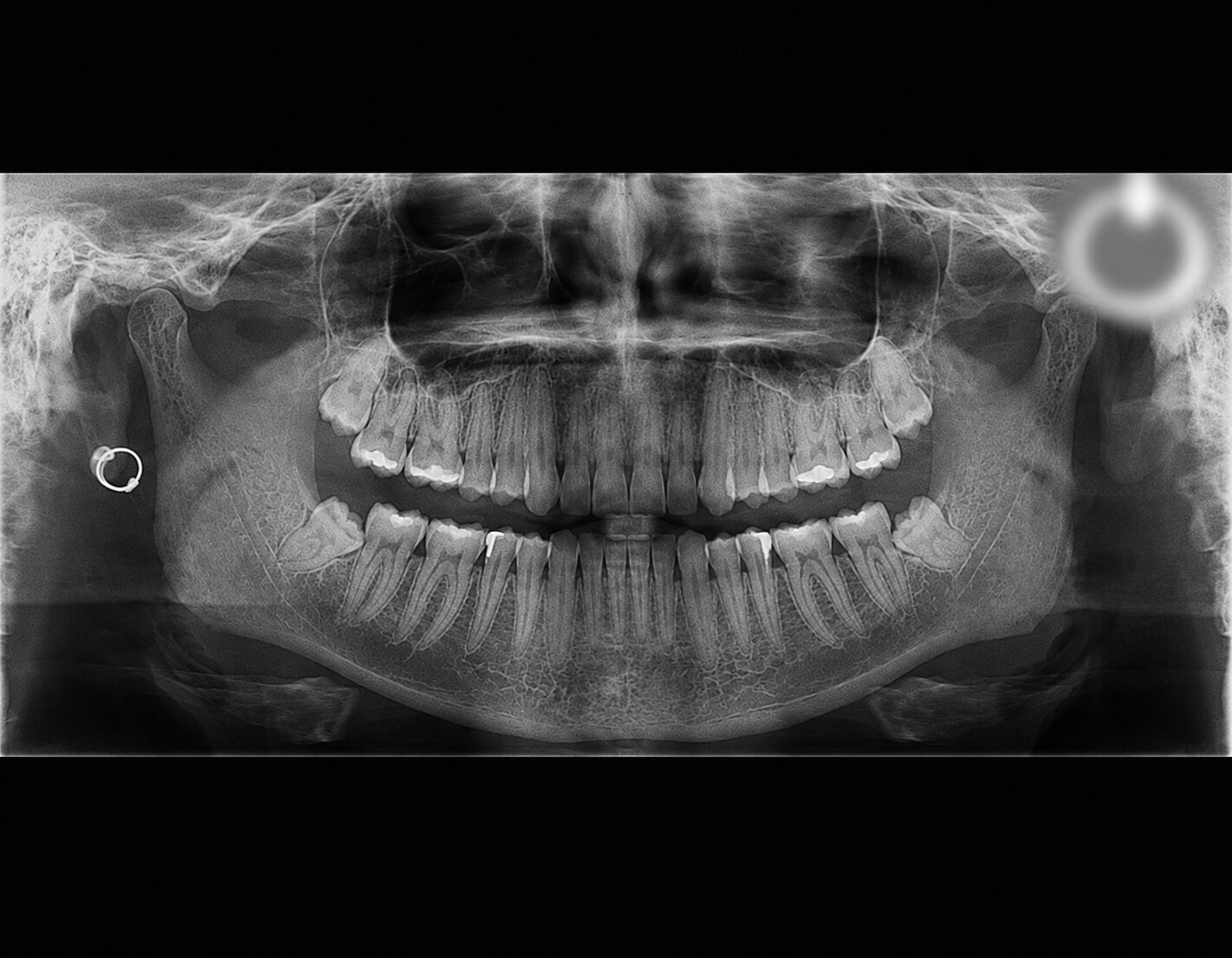
Look: a blurry, enlarged double of a metal/dense object — higher and on the opposite side from the real one.
Fix: remove glasses, jewelry, and any removable metal before exposure.
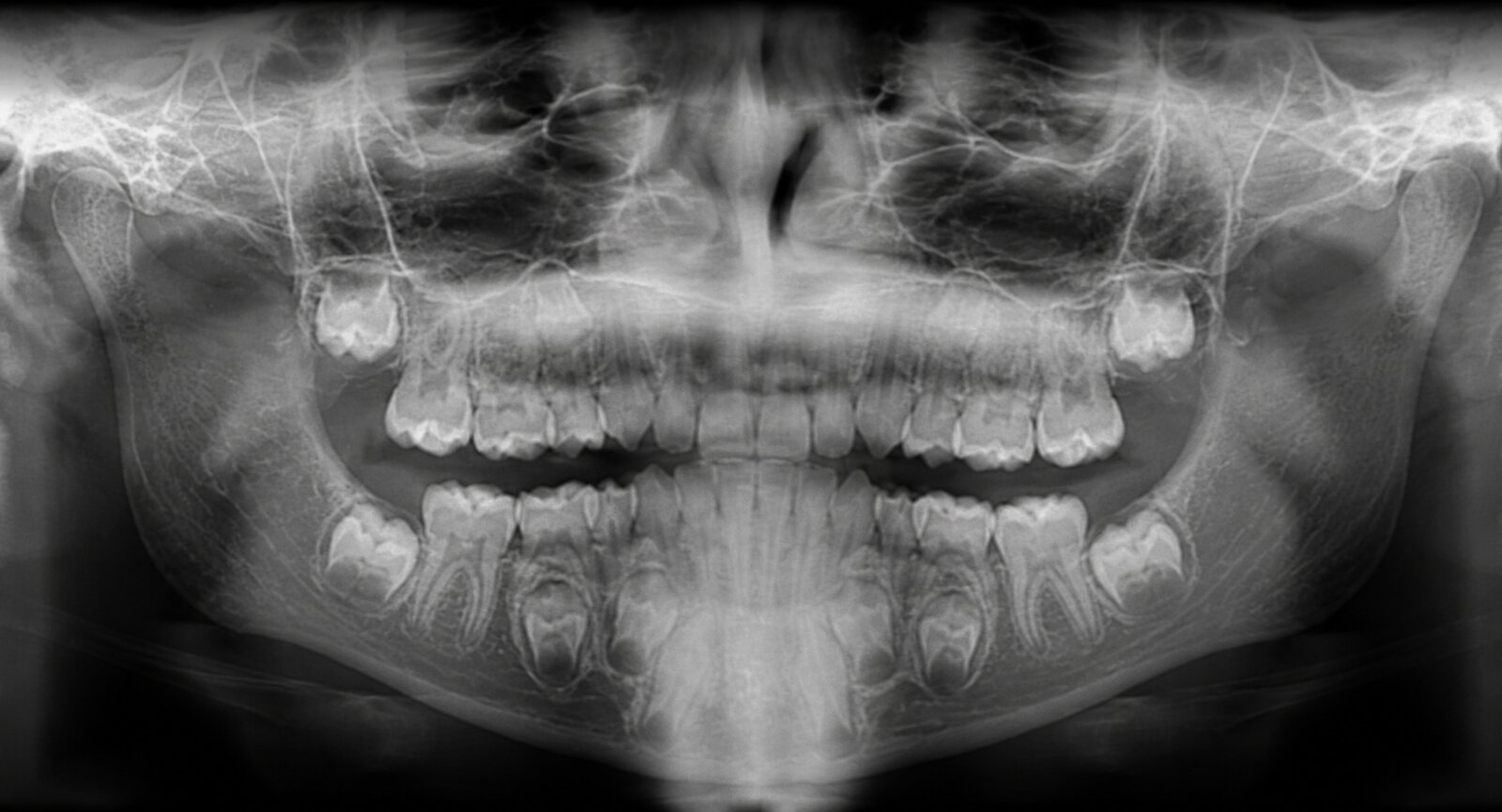
Look: the occlusal plane reverses into a "frown" curve; condyles may run off the top; upper incisors blur and magnify.
Fix: re-level so the Frankfort planeAn imaginary line from the top of the ear canal to the bottom of the eye socket. It should be parallel to the floor for a panoramic. is parallel to the floor.
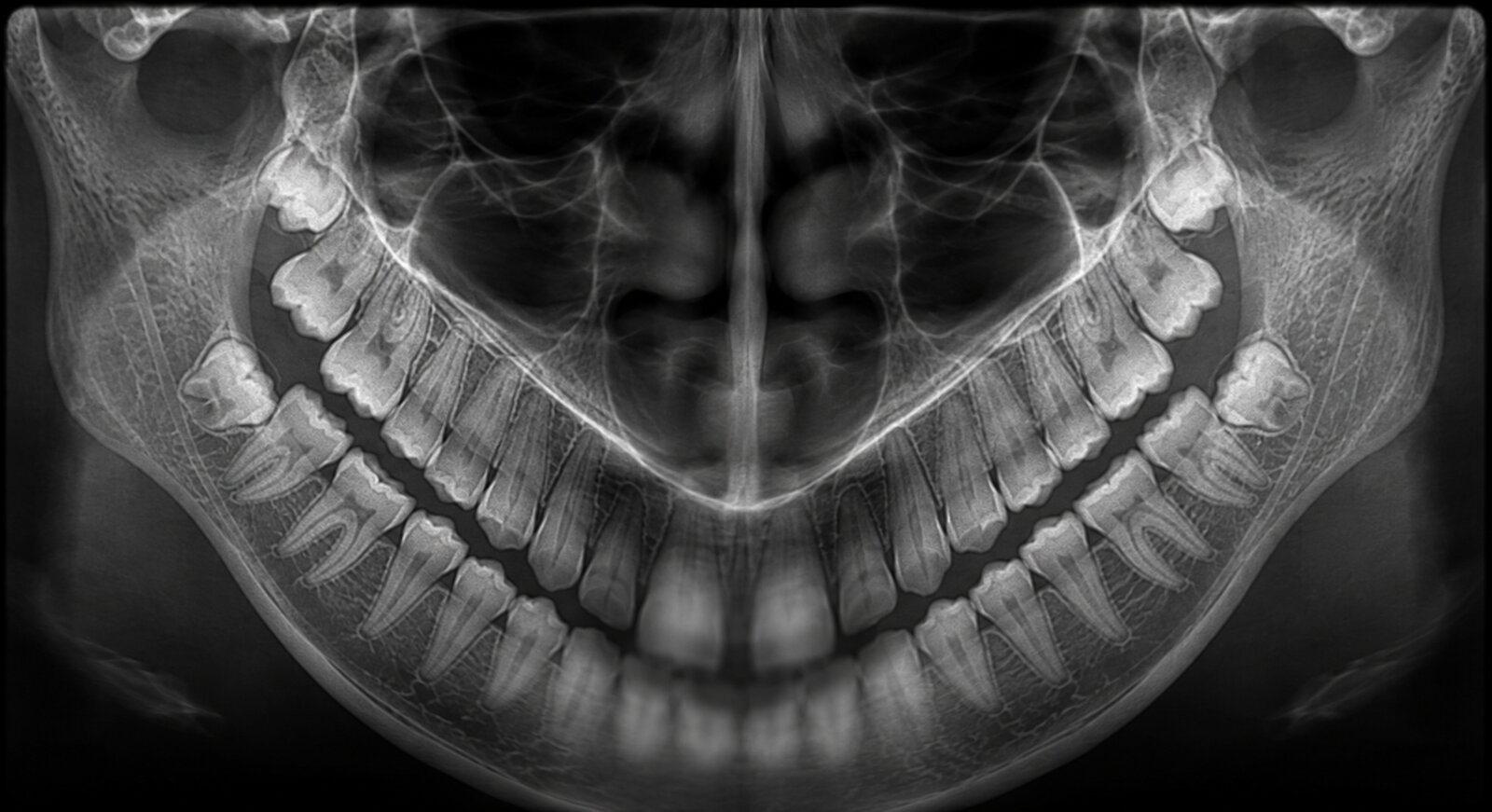
Look: an exaggerated "smile" curve; lower incisors blur with shortened-looking roots; the spine shows up more.
Fix: same as above — re-level the Frankfort plane, chin down brought back up.
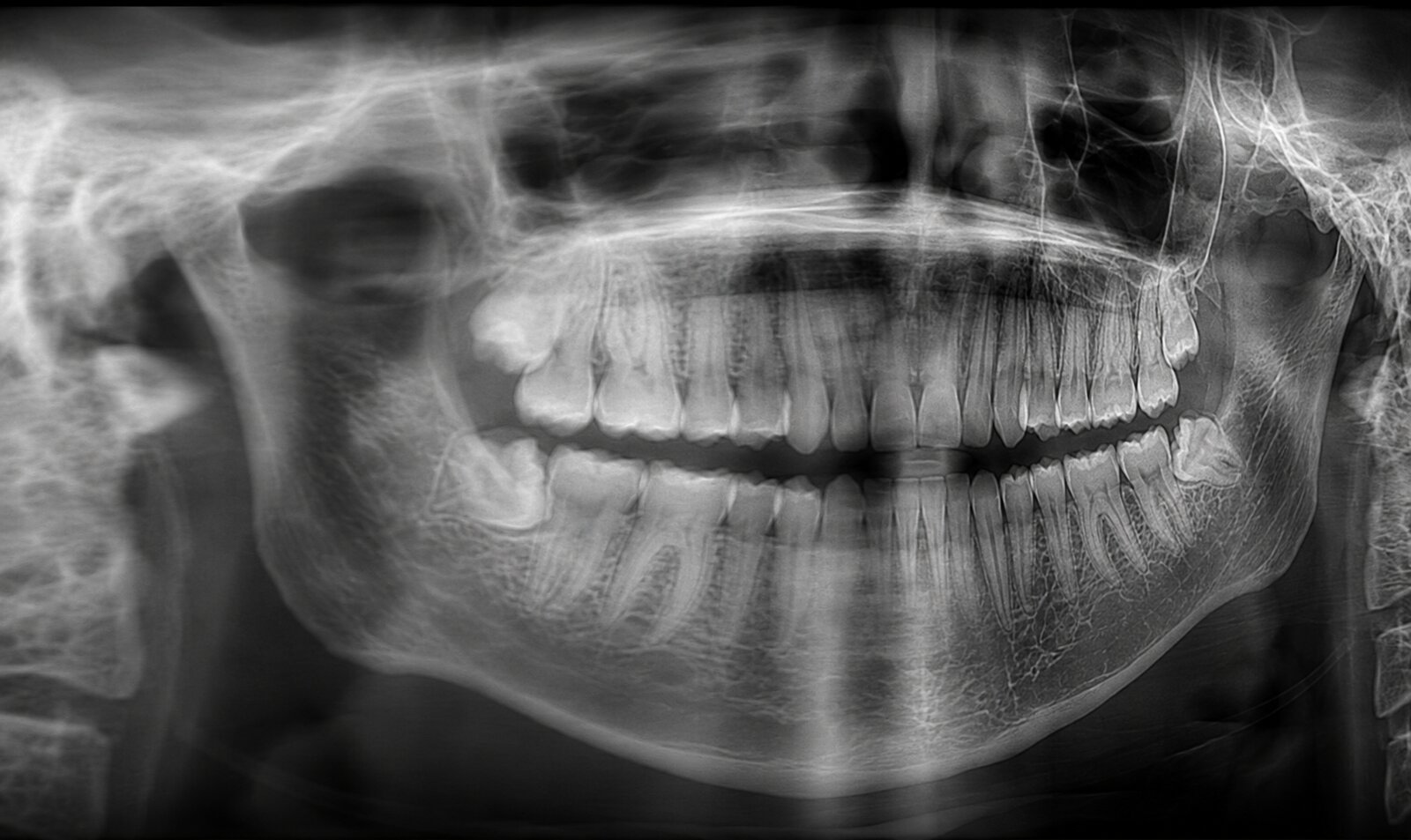
Look: uneven magnification — one side's teeth/ramus look bigger and blurrier, the other side smaller and sharper.
Fix: align the midsagittal plane perpendicular to the floor; center the midline light between the maxillary centrals.
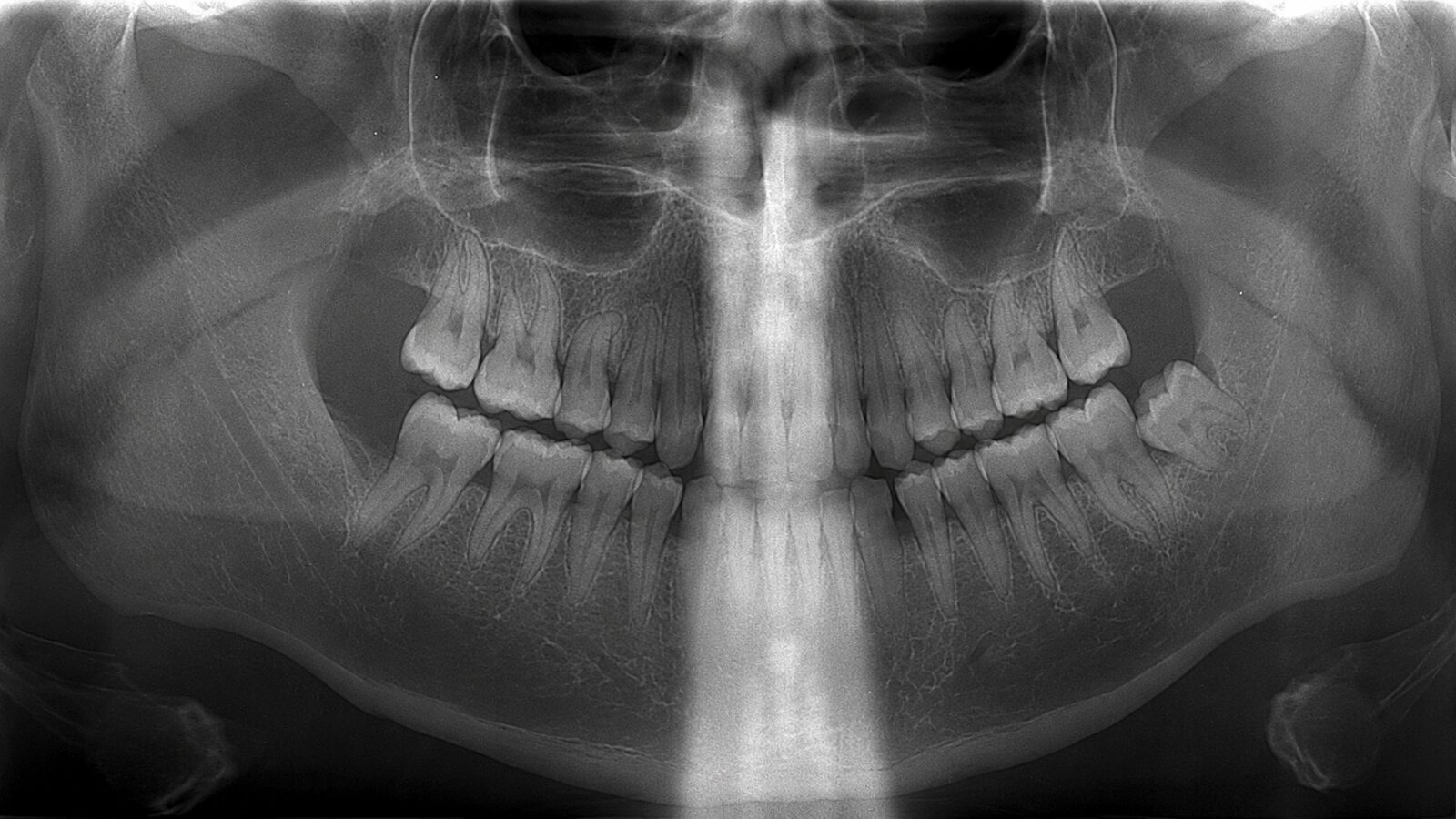
Look: a radiopaque (white) shadow wipes out the anterior teeth in the center of the image.
Fix: patient stands/sits as tall as possible, shoulders down — no slumping.
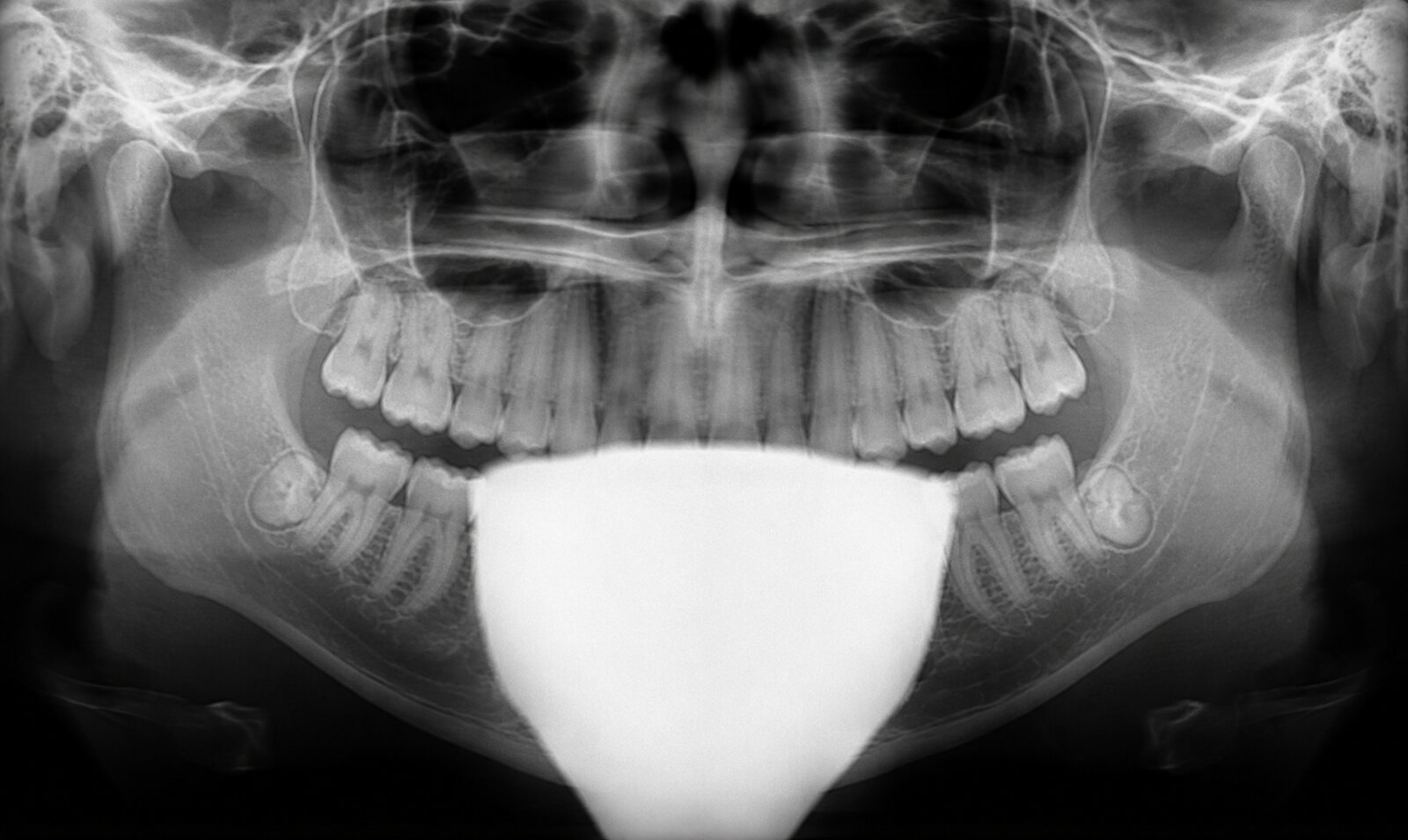
Look: a big radiopaque blob blocking the anterior region — because a thyroid collar was worn.
Fix: no thyroid collar on a panoramic — it sits right in the beam's path and blocks the anterior teeth. (A lead apron alone, without the collar, is fine.)
The pair the exam loves to swap is chin too high vs. chin too low. Here's the hook that locks it forever:
Chin too high flattens and reverses the arch curve into a frown — think "chin up, corners down." Chin too low does the opposite: it exaggerates the curve into a big smile. Same logic either direction: the occlusal plane tips the way the chin didn't.
Picture the two emoji: chin jammed up toward the ceiling gives you a flat, tired ⌢ (frown); chin tucked down toward the chest gives you an exaggerated ⌣ (smile). The image copies whichever face the chin is making.
Same skill either way: see the look, know the cause, know the fix.
Next · The SLOB Rule →